If you have broken your nose and it has healed crooked, or you cannot breathe through it as well as before, it can very often be improved, even years after the injury. A fresh break can sometimes be straightened by hand in the first week or two. Once the bones have set, correcting the shape and the breathing is a planned operation, usually a post-traumatic rhinoplasty or septorhinoplasty.
This guide is honest about both halves of the story: what to do in the first days after an injury, and, more importantly, how an old or badly-healed broken nose is corrected. We do not print prices here; for that, see our rhinoplasty cost guide.
I broke my nose and it is crooked, what should I do? If it is a fresh injury, get it assessed at A&E or urgent care, as a crooked break can sometimes be realigned by hand within about one to two weeks. If it healed crooked months or years ago, that window has passed, but the shape and any breathing problem can still be corrected with rhinoplasty or septorhinoplasty. The first step is an assessment to see exactly what the injury did.
Key Takeaways
- A fresh break can sometimes be realigned by hand (closed reduction), best within about one to two weeks, up to around three weeks before the bones set.
- An old or badly-healed broken nose is corrected with planned surgery, and there is no time limit: injuries from years ago are routinely corrected.
- A broken nose often bends the septum inside as well as the outside, so breathing and shape are frequently corrected together with a septorhinoplasty.
- If it healed crooked, see our dedicated crooked nose rhinoplasty page for how the shape is straightened.
- Get urgent help for a possible septal haematoma, clear watery fluid from the nose, or bleeding that will not stop (see the warning box below).
What to Do Right After You Break Your Nose
The NHS, and common sense, cover the first few days well, so we will keep this brief and honest. In the first hours: sit up and lean slightly forward if it is bleeding, breathe through your mouth, and hold a cloth-wrapped ice pack against the area for up to fifteen minutes at a time. Take paracetamol for pain and avoid ibuprofen or aspirin at first, as they can increase bleeding. Try not to blow or pick your nose for about two weeks.
The nose is usually too swollen to judge for the first few days. By around five to seven days the swelling settles enough to see whether it is genuinely crooked. Most simple breaks settle within about three weeks, though residual swelling can take up to six weeks.
Get urgent medical help (A&E or 999) if you have:
- A soft, purple swelling inside the nose (a possible septal haematoma), which needs draining quickly to protect the cartilage.
- Clear, watery fluid dripping from the nose, especially after a heavy blow, which can signal a more serious head injury.
- A nosebleed that will not stop, difficulty breathing that persists, or a severe headache with a change in vision.
Can a Broken Nose Be Fixed Years Later?
Yes. This is the question we are asked most, and the honest answer is that it is almost never too late. Once a break has healed crooked, the bones have set in the wrong position, so straightening by hand no longer works. Instead, the nose is corrected with a planned operation that resets and reshapes the bones and cartilage. Breaks from many years ago are routinely corrected.
What we can promise is honest assessment and, very often, a real improvement in both the look and the breathing. What no honest surgeon can promise is a guaranteed perfectly straight nose, because every injury and every nose heals differently.
How a Broken Nose Is Corrected
There are three main paths, and which one applies depends on how long ago the injury was and what it damaged.
Closed reduction (for a fresh break)
If you are seen within roughly one to two weeks, and up to about three weeks at the outer limit, the bones may still be mobile enough to be realigned by hand or with instruments. This straightens the position but does not reshape the nose, and, honestly, it does not always leave the nose perfectly straight.
Post-traumatic rhinoplasty (for an old or healed deformity)
Once the break has set, correcting an external bend, a hump or an asymmetry means controlled re-setting of the bones (osteotomies) and reshaping, sometimes with cartilage grafts taken from the septum or ear. This is the route for a nose that healed crooked, and it is the same careful reshaping described on our crooked nose rhinoplasty page.
Septorhinoplasty (when breathing is affected too)
A broken nose very often bends the septum, the wall inside the nose, as well as the outside. When that happens, breathing and shape are best corrected together in a single operation called a septorhinoplasty, rather than treating one and leaving the other. If the problem is mainly internal, our page on deviated septum surgery explains the functional side, and septorhinoplasty in London covers the combined operation.
When surgery is done, and how long results take
If a break is not treated in the first weeks, definitive reconstruction is usually planned once the tissues have fully settled, commonly around three to six months after the injury. As with any nasal surgery, the final result continues to refine over roughly six to twelve months, and longer where grafts are used.
Broken Nose from Sport
Rugby, boxing, football, hockey and martial arts are among the commonest causes of a broken nose, and a repeatedly knocked nose can end up both bent and blocked. The approach is the same: protect and assess it early, and if it heals badly, a post-traumatic rhinoplasty or septorhinoplasty can restore the shape and the airway. If you are still playing, we will talk through timing and protection so a correction is not undone by the next season.
When a Break Collapses the Bridge (Saddle-Nose)
Less commonly, a severe injury, an untreated septal haematoma, or loss of septal support can cause the bridge to sink, giving a scooped or saddle shape. This is uncommon, and it is corrected by rebuilding support with cartilage grafts, sometimes from the ear or rib in more significant cases. It is a good example of why early assessment of a bad break matters.
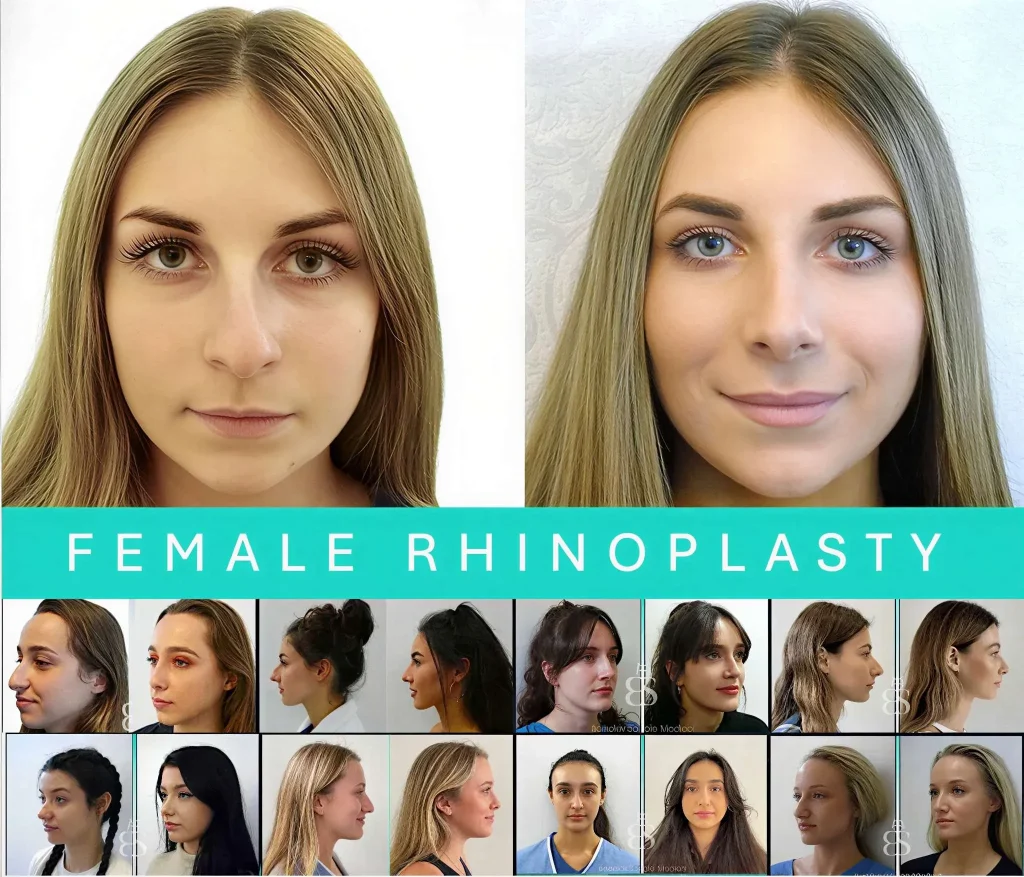
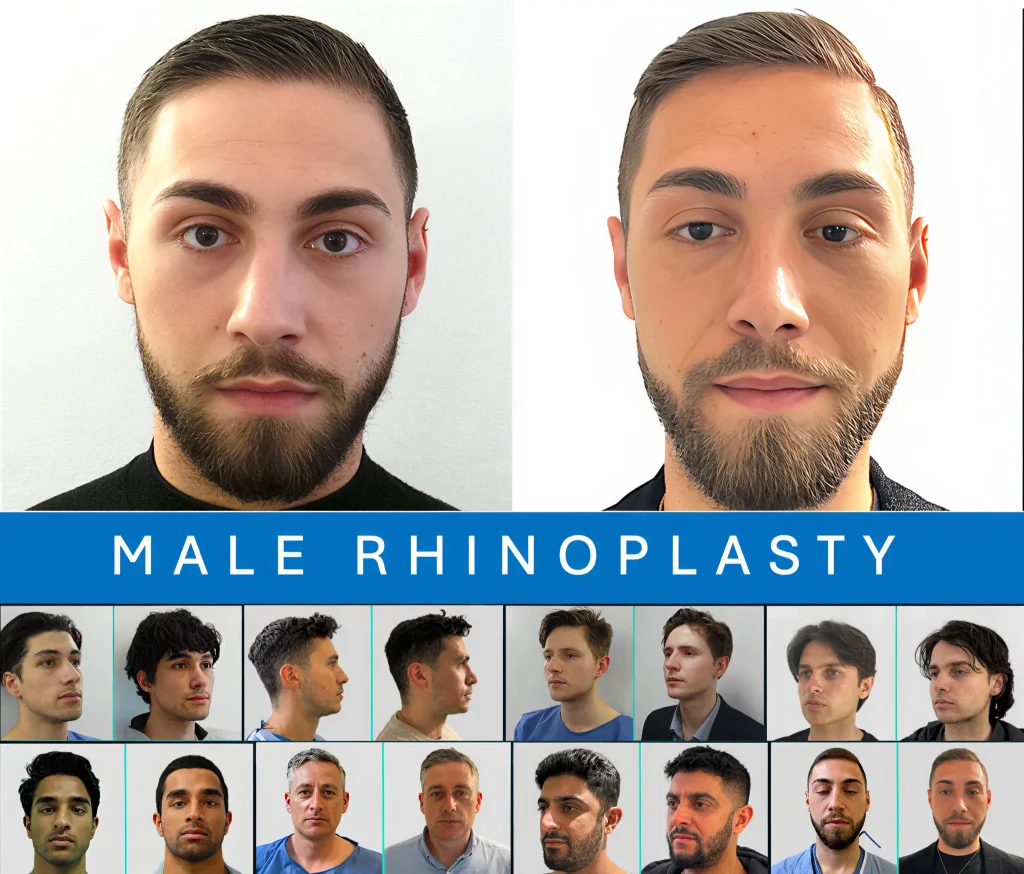
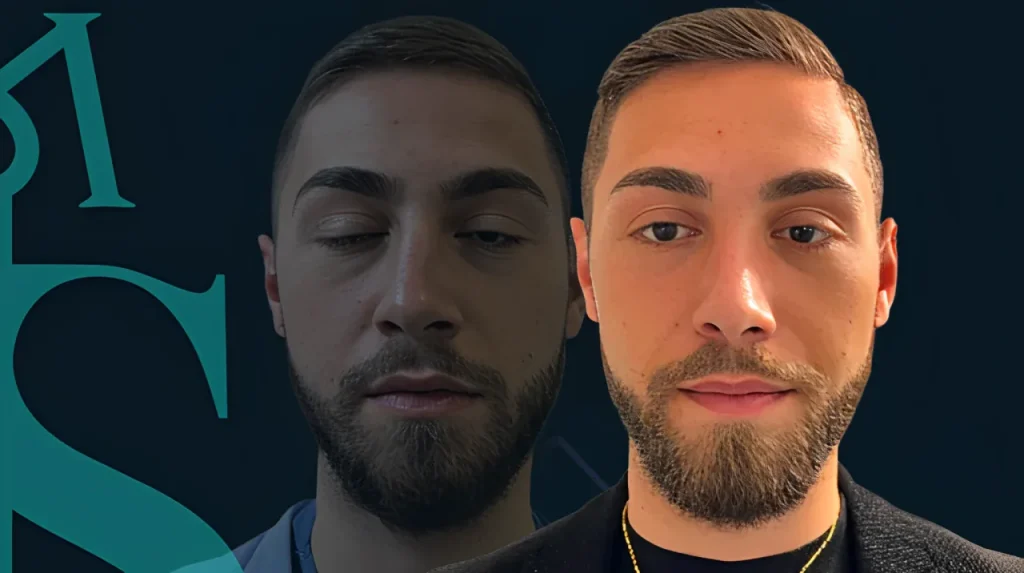
Before and After: Broken Nose Rhinoplasty at Berkeley Square Medical
These are consented patients of Mr Taimur Shoaib. Individual results vary, and these images are examples, not a promise of a specific outcome.
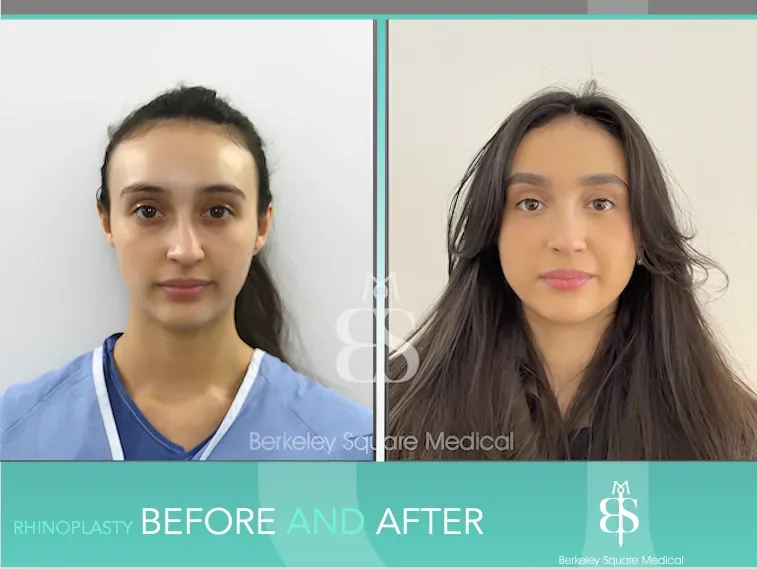
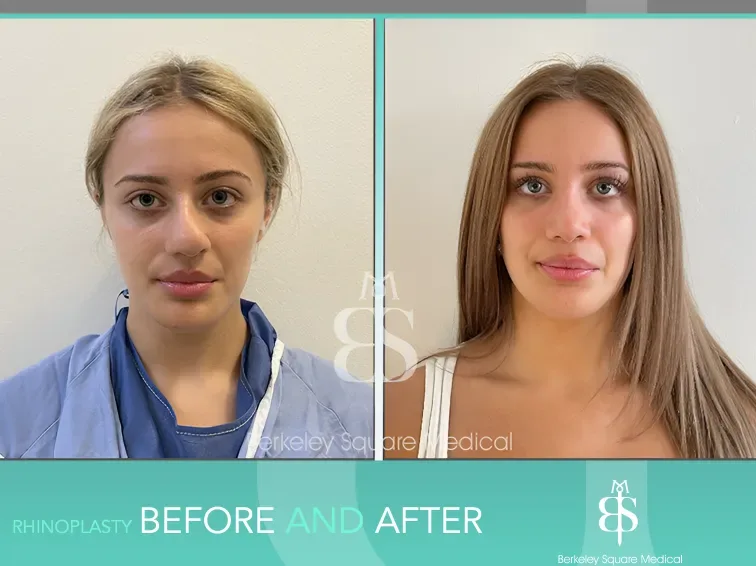
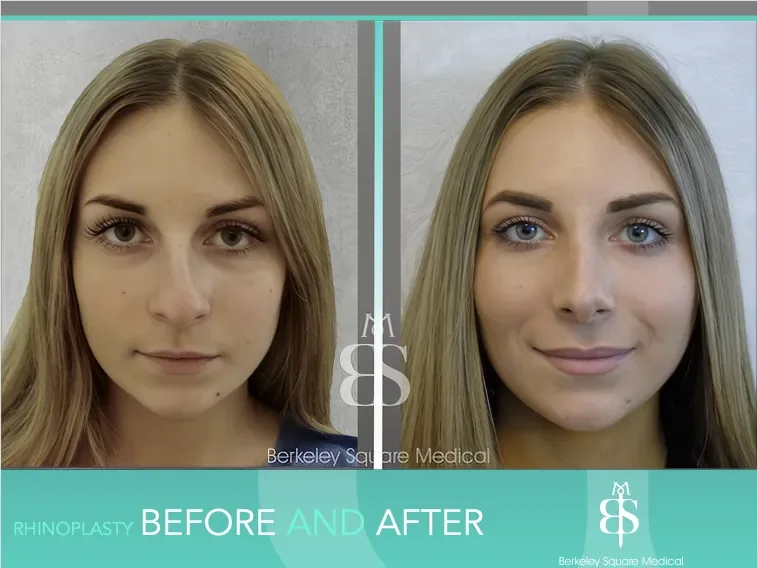
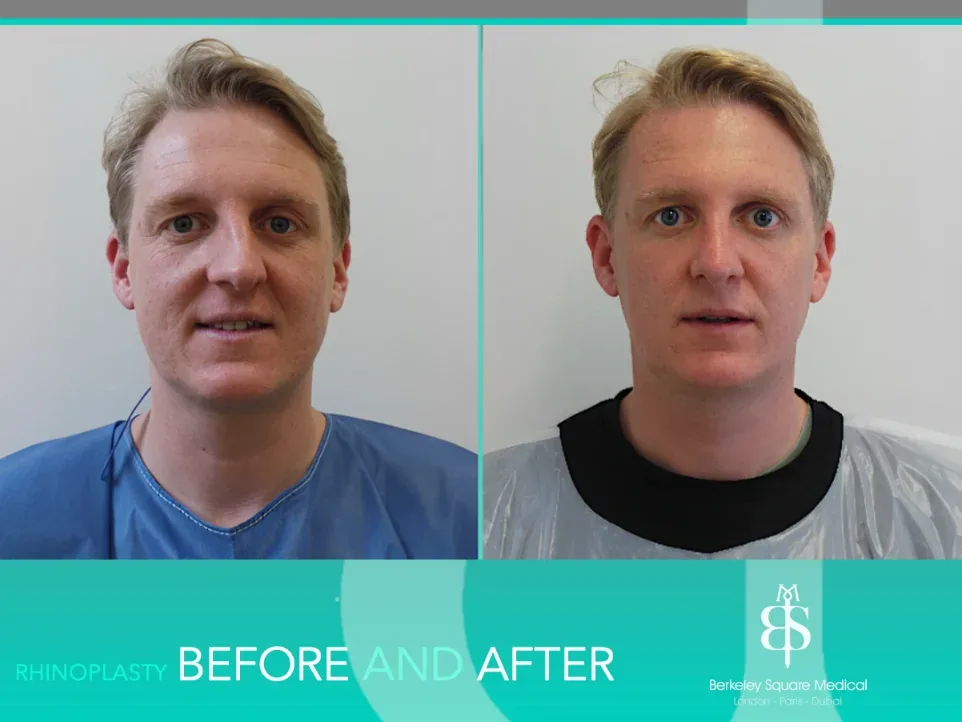
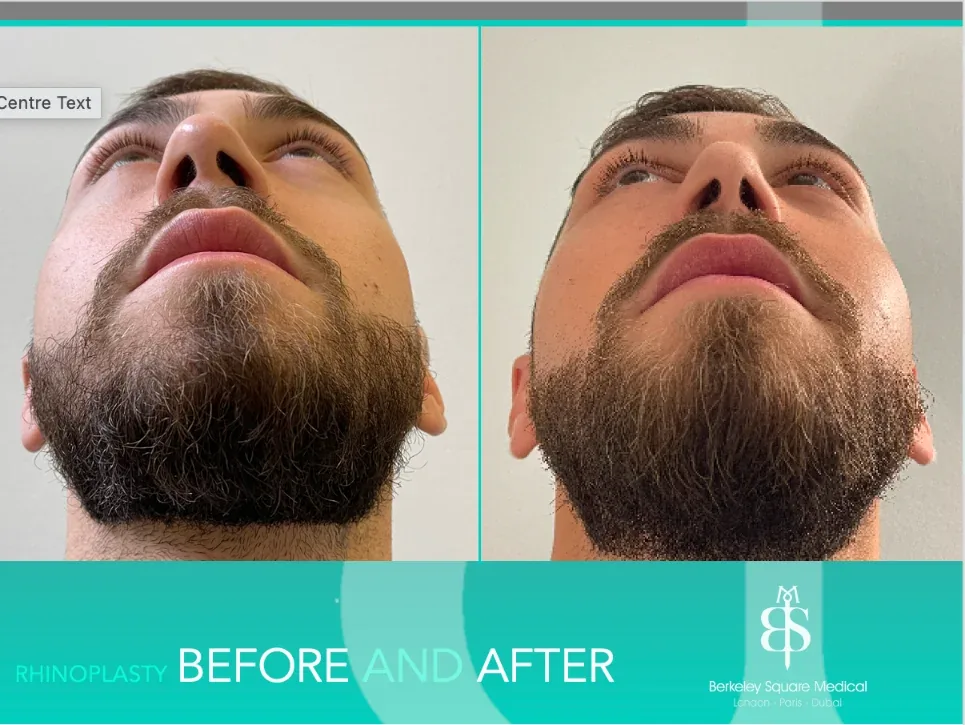
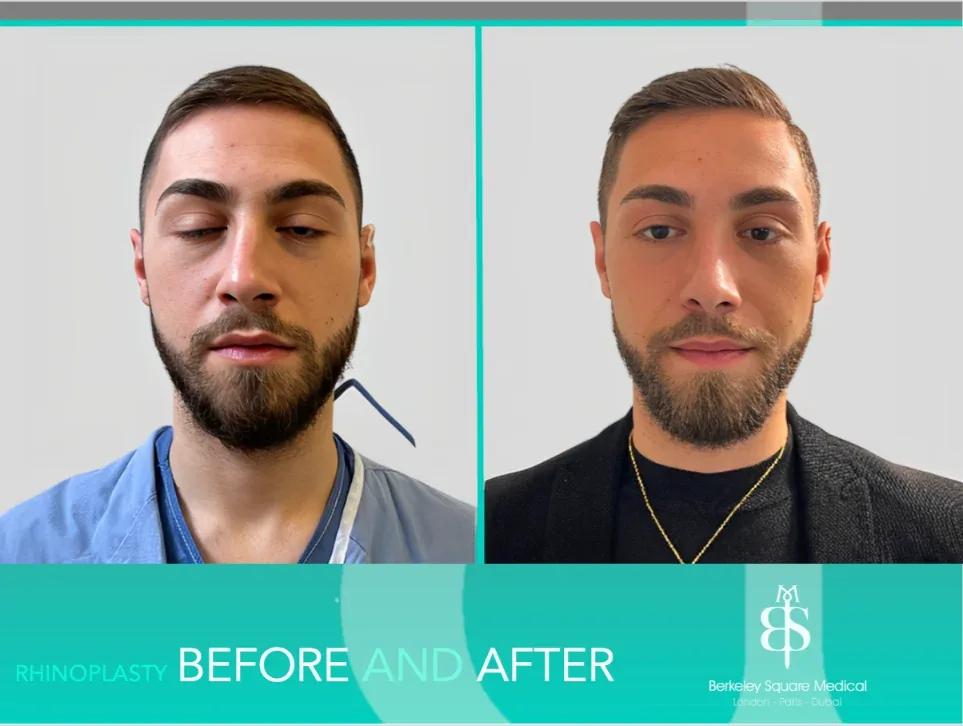
Consented patients of Mr Taimur Shoaib, Berkeley Square Medical, London. Results vary from person to person.
Recovery After Broken Nose Surgery
Most people take about one to two weeks off work after a corrective operation. A splint is usually worn for around a week, bruising around the eyes settles over one to two weeks, and you avoid contact sport and heavy exercise for several weeks while the bones knit. The nose keeps refining for months, so patience with the final result is part of the process. Our rhinoplasty aftercare guide sets out the week-by-week detail.
Why Read This From a Rhinoplasty Surgeon
This page is reviewed by Mr Taimur Shoaib, a Consultant Plastic Surgeon on the GMC Specialist Register (GMC 3615443) who performs rhinoplasty and septorhinoplasty, including post-traumatic correction, at Berkeley Square Medical, 64 Harley Street. He has published peer-reviewed work on rhinoplasty, including an audited single-surgeon series of closed rhinoplasties (Indian Journal of Otolaryngology and Head & Neck Surgery, 2022) and a technique paper on tip control in closed rhinoplasty (European Journal of Plastic Surgery, 2026). As with all single-surgeon research, this is lower-tier evidence, results vary between patients, and no honest surgeon can promise a specific outcome. What we can promise is a candid assessment of your injury and your options.
Broke your nose, or unhappy with how it healed? The best next step is an honest assessment of exactly what the injury did to the bone, cartilage and your breathing. Learn about rhinoplasty at Berkeley Square Medical, or read our crooked nose and septorhinoplasty pages if your nose healed bent or you cannot breathe well.
Frequently Asked Questions
Can a broken nose be fixed after years?
Yes. Once a break has healed, the bones have set, so it is corrected with a planned post-traumatic rhinoplasty or septorhinoplasty rather than by hand. There is no time limit, and injuries from many years ago are routinely corrected. Improvement is very often possible, though no surgeon can guarantee a perfectly straight nose.
How do I know if my nose is broken or just bruised?
A break is more likely if you heard or felt a crack, the nose looks bent or moved, there was significant bleeding, or breathing is newly blocked. Bruising and swelling alone can happen without a fracture. Because swelling hides the true shape for the first few days, it is worth having it assessed, and reviewed again at about a week once the swelling settles.
Does a broken nose always need surgery?
No. Many broken noses heal well on their own and need no operation. Surgery is considered when the nose has healed crooked, the bridge has collapsed, or breathing is affected. A fresh break that is clearly displaced may be realigned by hand within the first couple of weeks.
How soon after breaking my nose should I see a specialist?
Soon. If the nose looks displaced, being seen within about one to two weeks keeps the option of realigning it by hand open, before the bones set. After that, correction is still very possible but becomes a planned operation once the tissues have settled, commonly around three to six months later.
Does breaking your nose affect your breathing?
It can. A break often bends the septum, the wall inside the nose, which narrows the airway. That is why breathing problems after an injury are common, and why the shape and the breathing are often corrected together in a single septorhinoplasty rather than treating one alone.
Is a nose job free if you break your nose?
Not for cosmetic reshaping. The NHS may treat a broken nose where there is a genuine functional problem, such as a blocked airway, subject to its criteria, but it does not provide cosmetic reshaping. A private post-traumatic rhinoplasty at Berkeley Square Medical is designed to address both the appearance and the breathing together.
How much does broken nose surgery cost?
The cost depends on whether it is a straightforward correction or a combined septorhinoplasty, and on the technique needed. We do not list a single figure here because it is tailored to your assessment. See our rhinoplasty cost guide for how pricing and finance work.
Does a broken nose ever go back to normal by itself?
A minor break with no displacement can heal looking much as before. But once a nose has healed visibly crooked or with a blocked airway, it will not straighten itself, and correction needs treatment. The good news is that even long-standing deformities can usually be improved.
Fix a broken nose in London
Whether your injury is recent or healed badly years ago, understand exactly what can be corrected, honestly and without pressure, with Mr Taimur Shoaib at 64 Harley Street.
Explore rhinoplasty at Berkeley Square Medical