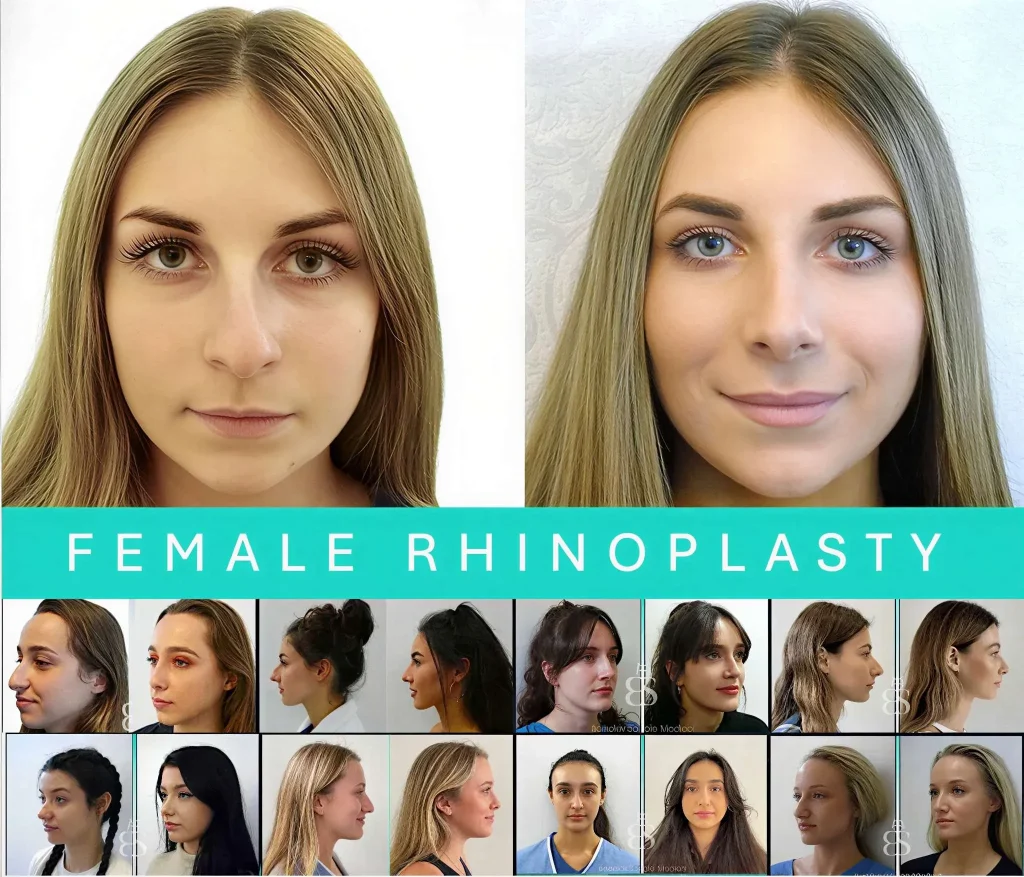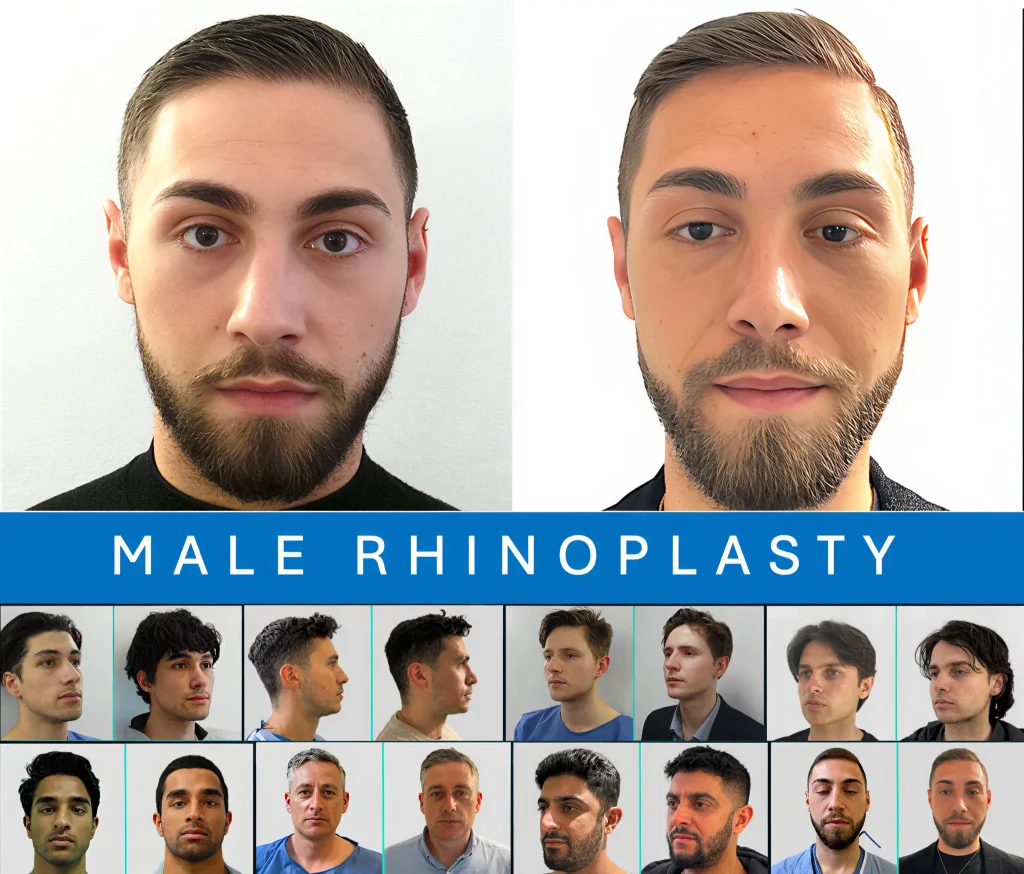

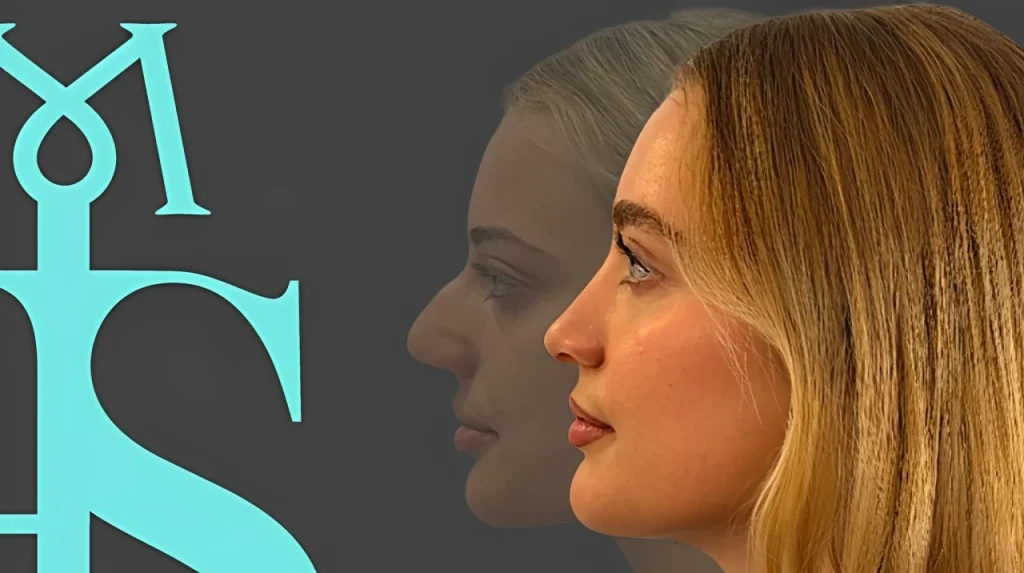
If you have had a nose job and, months later, feel like the area just above your tip looks too full or your nose has taken on a curved "beak" shape from the side, you may be worried about a pollybeak deformity. Patients often describe it as a beak nose after rhinoplasty, a polly beak nose, or simply supratip fullness that will not settle. A true pollybeak is a recognised complication, but in the early months swelling alone can mimic it and usually improves on its own. This guide explains what a pollybeak deformity is, why it happens, how to tell lasting deformity from ordinary swelling after rhinoplasty, and how a genuine pollybeak is corrected, usually with a carefully planned revision.
Key Takeaways
- A pollybeak deformity makes the area just above the nasal tip (the supratip) look fuller than the tip itself, giving the profile a rounded, parrot-beak shape rather than a smooth slope.
- It can be caused by under-resection of the dorsal hump, over-resection of supporting cartilage or septum, or excess scar tissue, and is more common in patients with thicker nasal skin.
- Some supratip fullness is normal for the first few months after rhinoplasty; a true pollybeak deformity usually only becomes clear 3 to 6 months or more into healing.
- Early, swelling-related cases may be managed with steroid injections or taping, but an established structural pollybeak typically needs revision rhinoplasty.
- Revision is usually planned 9 to 12 months or later, once healing has stabilised, and is best done by a surgeon who regularly performs secondary rhinoplasty.
What Is a Pollybeak Deformity?
A pollybeak deformity is a contour problem that affects the supratip, the section of the nose between the tip and the bridge. Instead of the tip being the most projected point, the supratip looks fuller or more prominent than the tip, creating a profile that resembles a bird's beak. This is where the names pollybeak, parrot beak and polly beak nose come from. Its key features are:
- Extra fullness or a small bump just above the nasal tip
- A tip that looks relatively under-projected or "pushed down"
- A side profile that appears rounded or "beaky" rather than smoothly sloping
A pollybeak can develop after both cosmetic and functional rhinoplasty. Sometimes it is due to the way the nose was reshaped surgically; in other cases it is linked to healing, scar tissue, or thick skin holding volume in the supratip.
Pollybeak, parrot beak, or polly beak nose?
These are all names for the same thing. In a balanced nose there is a subtle supratip break, a small step down from the tip to the bridge that lets the tip stand out as the most projected point. A pollybeak is the loss or reversal of that supratip break, so the area above the tip becomes the fullest point and the profile curves down like a bird's beak. Whether you call it a pollybeak, a parrot beak, or a polly beak nose, it describes this same supratip fullness.
What Causes a Pollybeak Deformity After Rhinoplasty?
A pollybeak deformity often results from more than one factor acting together. The most common causes are:
1. Incomplete reduction of the dorsal hump
If too little cartilage or bone is removed from the bridge, residual cartilage near the tip can leave the supratip looking too full. As swelling settles, that extra structure becomes more obvious, creating a pollybeak-style contour.
2. Over-resection of supporting structures
Removing too much from the nasal septum or bridge can cause the tip to drop or lose support over time. When the tip settles but the supratip stays full, the profile takes on a beak-like shape.
3. Thick skin and scar tissue (soft-tissue pollybeak)
Patients with thick nasal skin are more prone to a soft-tissue pollybeak. Even when the underlying cartilage and bone are shaped well, swelling and excess scar tissue can build up in the supratip and mask the refinement underneath.
4. Healing variability and surgical planning
Every nose heals differently. If skin thickness, cartilage strength and long-term tip support are not fully accounted for during planning, the final shape can drift towards a pollybeak over several months. Because the exact cause changes the best treatment, an accurate diagnosis by an experienced rhinoplasty surgeon matters before any revision is considered.
When Does a Pollybeak Deformity Show After Rhinoplasty?
It is completely normal for the nose to look swollen and full in the first weeks after rhinoplasty, especially in the supratip just above the tip. This early supratip swelling after rhinoplasty can mimic a pollybeak even though the final shape has not settled. A rough timeline looks like this:
- 0 to 6 weeks: swelling is at its peak. The bridge and supratip can look puffy or rounded, and it is far too early to judge the final contour.
- 6 weeks to 3 months: swelling gradually reduces and the outline of the nose becomes clearer, but some fullness above the tip is still common.
- 3 to 6 months: the shape is more stable. If a true pollybeak deformity is developing, it usually becomes clearer during this period.
- 6 to 12 months: subtle refinement continues as deeper tissues settle. Most surgeons prefer to wait close to a year before deciding on any major revision, unless there is an obvious structural or functional problem.
If you are worried at any stage, the most important step is to raise it with your surgeon at your follow-up visits. They can tell you whether you are still seeing normal swelling or whether a genuine supratip contour problem is emerging. In some cases early taping or small steroid injections into the supratip can help manage persistent swelling without surgery, though, like any injection, these carry small risks such as skin thinning and should only be given by an experienced surgeon.
Pollybeak Deformity or Swelling: How to Tell the Difference
In the first weeks after rhinoplasty it is completely normal for the bridge and tip to look fuller, rounder or slightly "beaky" because of swelling. That can make many patients worry they already have a pollybeak when the nose simply has not settled. A few pointers help tell them apart:
- Timing: in the first 6 to 8 weeks, supratip swelling is expected and usually improves steadily.
- Texture and feel: swelling tends to feel soft and puffy; a true pollybeak related to cartilage or bone often feels firmer.
- Trend over time: if the area is gradually shrinking and your profile is improving, it is probably swelling. If fullness persists or worsens after several months, a pollybeak deformity becomes more likely.
Because this is hard to judge on your own, it is important to attend all follow-up appointments and share your concerns. Your surgeon can examine the internal and external structures, compare against your pre-operative photos, and tell you whether you are seeing normal healing or a developing deformity.
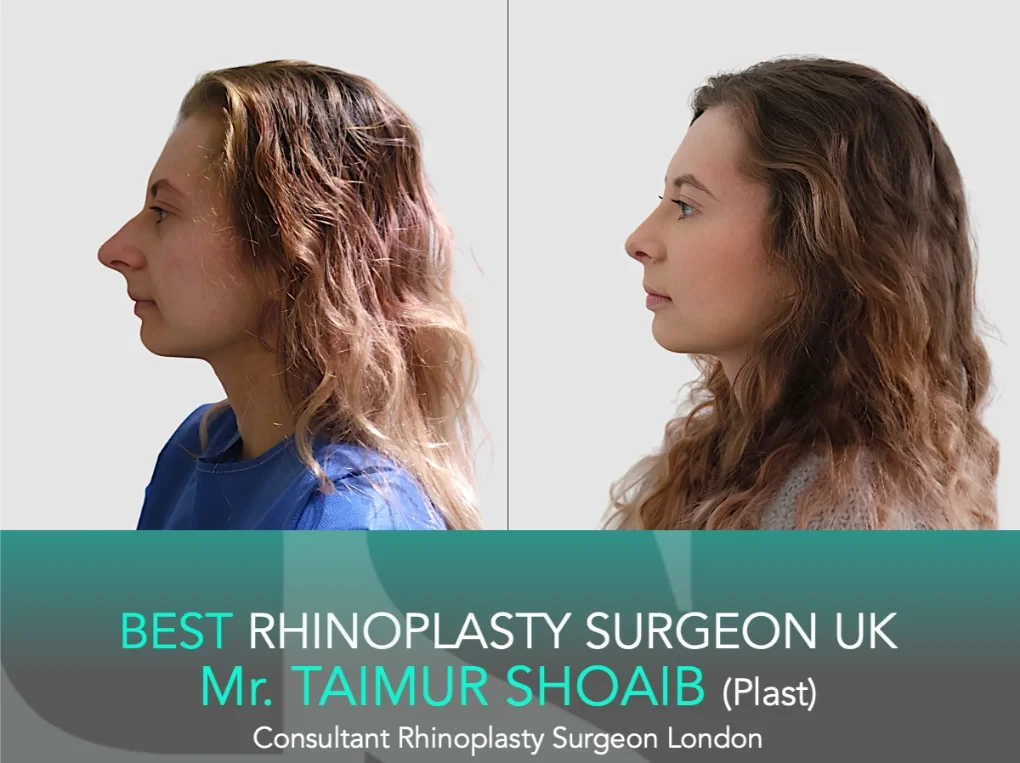
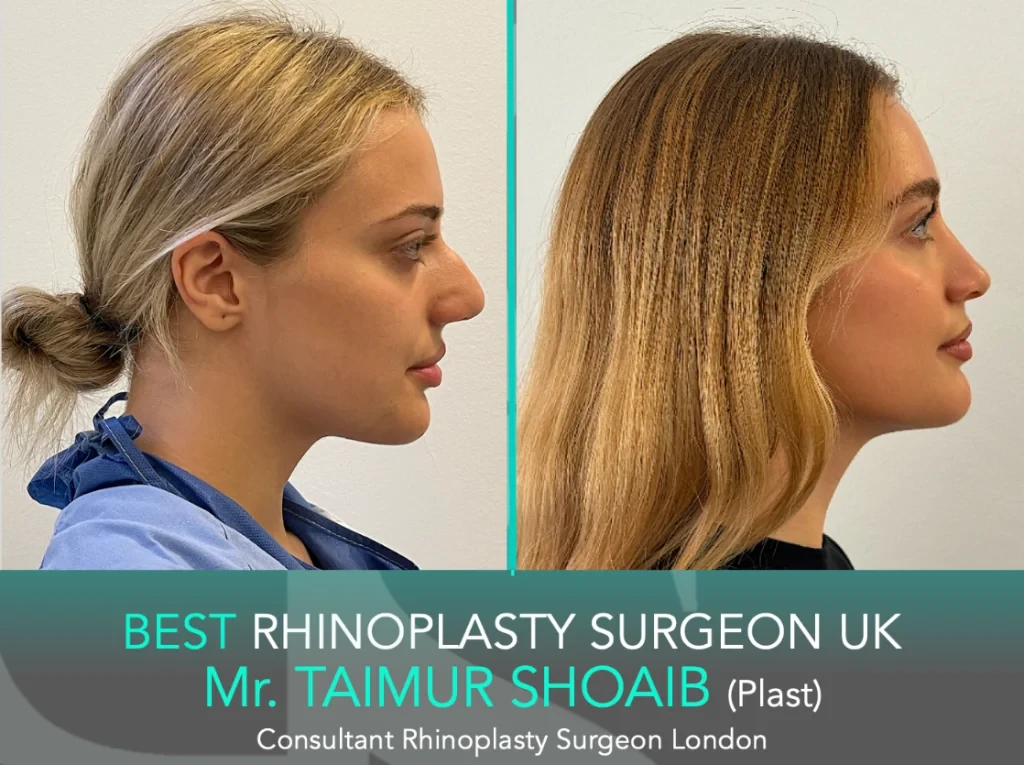
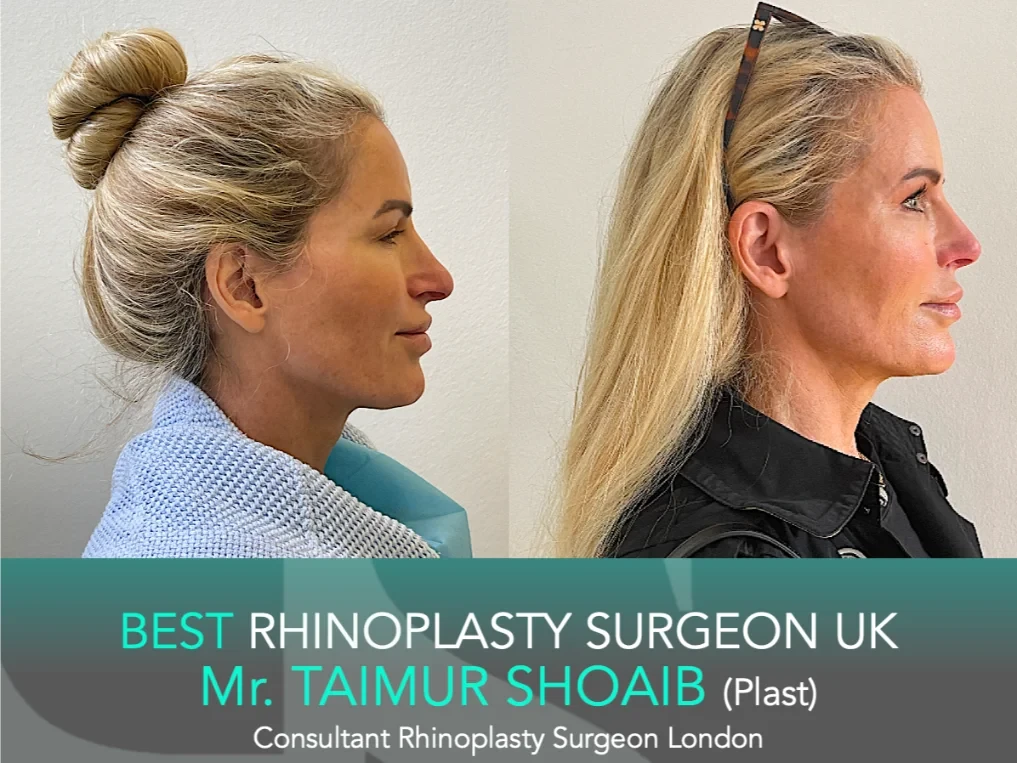
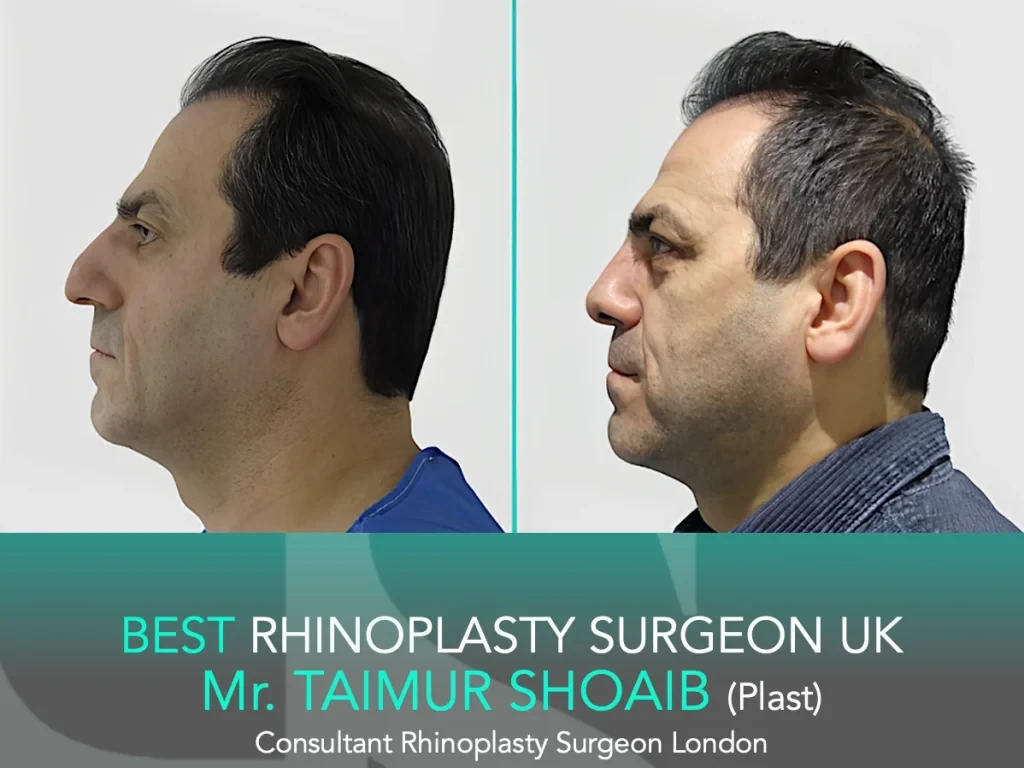
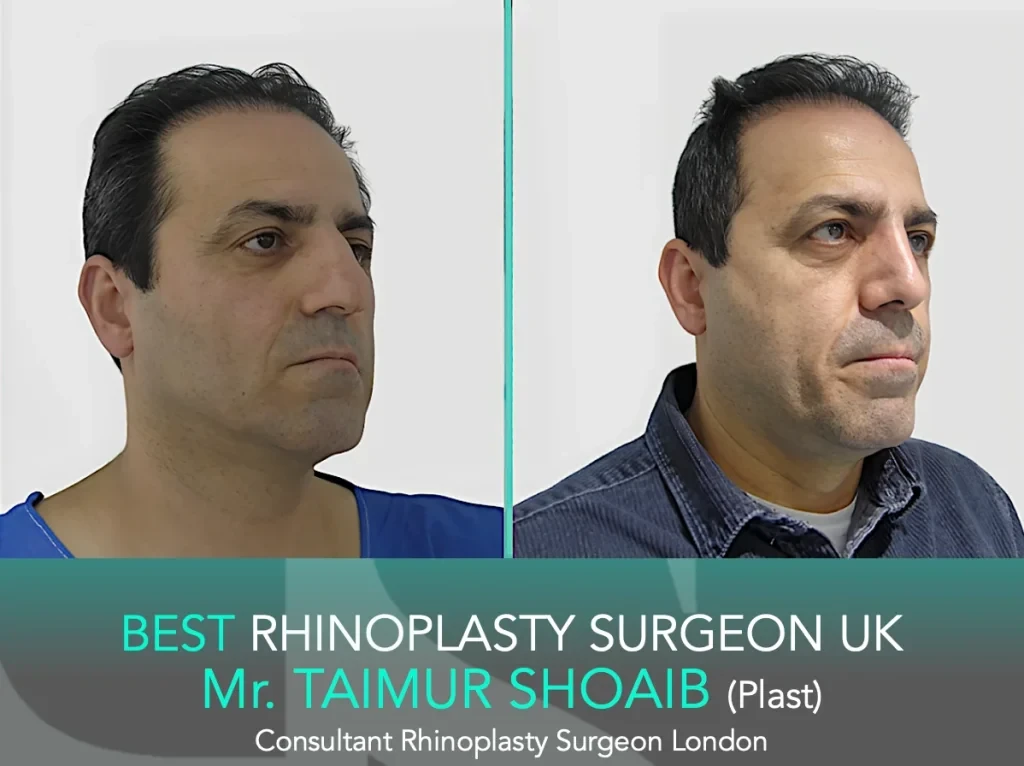
Pollybeak Correction: Before and After
Real results from Mr Taimur Shoaib, showing a flatter, more balanced supratip and a tip that sits as the most projected point after correction. Every nose is different, so these are shown to illustrate the kind of change that is possible, not a guaranteed outcome.
How Is a Pollybeak Deformity Corrected?
Treatment depends on what is causing the pollybeak appearance and how long it has been since your original surgery.
Non-surgical options (early, swelling-related cases)
If the fullness is mainly soft-tissue swelling or scar tissue rather than excess cartilage, your surgeon may suggest:
- Supratip steroid injections to soften and thin out scar tissue.
- Taping or splinting in the early months to encourage a smoother contour.
- Time and observation, as some swelling continues to improve on its own over 6 to 12 months.
These measures are usually tried first when the underlying bone and cartilage framework is believed to be well shaped.
You may also read about dermal filler for a pollybeak. Filler does not remove supratip fullness. At most it can camouflage a very mild case by subtly rebalancing the areas above and below the tip, and it is temporary. It is used rarely and selectively, because adding volume to an already full supratip can make the problem worse, so it is not a substitute for correcting a true structural pollybeak.
Revision rhinoplasty (true structural pollybeak)
When the deformity comes from the nasal structure itself, for example too much cartilage left near the tip, over-resection of the bridge, or unfavourable scar formation, a revision rhinoplasty is often required. This is typically considered 9 to 12 months or later, once healing has stabilised. During revision, an experienced surgeon may:
- Trim or reshape excess cartilage in the supratip area.
- Refine the nasal tip framework so the tip projects more clearly than the area above it.
- Add cartilage grafts (from the septum, ear, or rib) to rebuild a smooth, natural bridge line if too much tissue was removed.
- Address scar tissue and re-drape the skin more evenly over the new framework.
Because revision rhinoplasty is more complex than a first operation, it is best done by a surgeon who routinely performs secondary rhinoplasty and has specific experience correcting pollybeak deformity. A detailed consultation, examination, and honest discussion of goals and limitations help determine the safest, most effective plan for your nose.
Can a Pollybeak Deformity Be Prevented?
Not every case is avoidable, but the risk can be greatly reduced by careful planning and surgical technique. Key factors include:
- Accurate pre-operative assessment of skin thickness, cartilage strength, and nasal proportions.
- Avoiding both under-reduction (not removing enough hump) and over-reduction (removing too much support) of the bridge.
- Ensuring the tip is properly supported and projected, particularly in patients with heavy or thick skin.
- Respecting the soft-tissue envelope and minimising trauma during surgery.
- Close follow-up after the operation, with early treatment of problematic scar tissue where appropriate.
Choosing a surgeon with a proven track record in rhinoplasty and revision rhinoplasty is one of the most effective ways to lower your risk. At Berkeley Square Medical, Mr Shoaib routinely performs secondary nose surgery for patients unhappy with a previous result.
Related reading
- Revision rhinoplasty in London, how a previous rhinoplasty, including a pollybeak deformity, is corrected with cartilage grafting and tip refinement.
- Nose collapse after rhinoplasty, a related loss-of-support complication and how it is repaired.
- Retracted columella after rhinoplasty, another common post-rhinoplasty concern affecting the tip and nostril show.
- Rhinoplasty and revision cost in London, what a corrective procedure typically involves.
- Uneven nostrils after rhinoplasty, why nostrils look asymmetric after surgery and how it is corrected.
- Scar tissue after rhinoplasty, how internal scar tissue forms and how firm scar tissue is softened or removed.
Frequently Asked Questions
What is a pollybeak deformity after rhinoplasty?
A pollybeak deformity is a contour issue where the area just above the nasal tip (the supratip) looks fuller than the tip itself, creating a profile that resembles a bird's beak. It most often becomes noticeable once the majority of post-operative swelling has settled.
What is a "polly beak nose"?
"Polly beak nose", "parrot beak" and "pollybeak" all describe the same thing: a nose where the supratip is fuller than the tip, so the side profile curves down like a bird's beak. It is called a pollybeak because of that beak-like shape, and after rhinoplasty it can be caused by residual cartilage, loss of tip support, or thick scar tissue.
How can I tell if it is just supratip swelling or a true pollybeak deformity?
In the first few weeks to months after rhinoplasty, supratip swelling is usually due to normal healing and often improves on its own. A true pollybeak deformity is more likely if the fullness persists beyond 3 to 6 months, feels firm or structured rather than soft and puffy, and your surgeon confirms it is not just residual swelling.
What causes a pollybeak deformity after nose surgery?
Common causes include leaving too much cartilage or bone in the supratip area, over-resecting the septum so the tip appears relatively pushed down, or excess scar tissue forming under thick nasal skin. Inadequate planning for skin thickness or tip support can also contribute, and often more than one factor is involved.
Can a pollybeak deformity go away on its own?
Mild supratip fullness caused mainly by swelling or soft scar tissue can sometimes improve with time, taping, or steroid injections. However, structural causes such as excess cartilage or bone usually do not resolve on their own and may require revision surgery.
How is a pollybeak deformity corrected?
Treatment typically involves revision rhinoplasty. Depending on the cause, your surgeon may reduce excess cartilage or bone, refine and support the nasal tip, or address thick scar tissue. Early swelling-related cases may first be managed with steroid injections or taping. The goal is a smooth, natural bridge and a balanced tip profile without over-shortening the nose.
When is the right time to have revision surgery for a pollybeak deformity?
Most surgeons recommend waiting at least 9 to 12 months after the original rhinoplasty before a full revision, to allow swelling to settle and scar tissue to mature. In certain cases of early scar-related fullness, non-surgical options such as steroid injections may be tried sooner, based on your surgeon's advice.
Can a pollybeak deformity be prevented?
Not every case is avoidable, but careful pre-operative assessment of skin thickness and tip support, avoiding both under- and over-reduction of the bridge, and close follow-up all lower the risk. Choosing a surgeon experienced in rhinoplasty and revision rhinoplasty is one of the most effective ways to reduce the chance of a pollybeak.
Worried about a pollybeak after rhinoplasty?
The first step is an examination to tell normal supratip swelling from a true pollybeak, and to plan the right correction for your nose. Book a consultation with Mr Taimur Shoaib at 64 Harley Street, London.
Book a consultation